

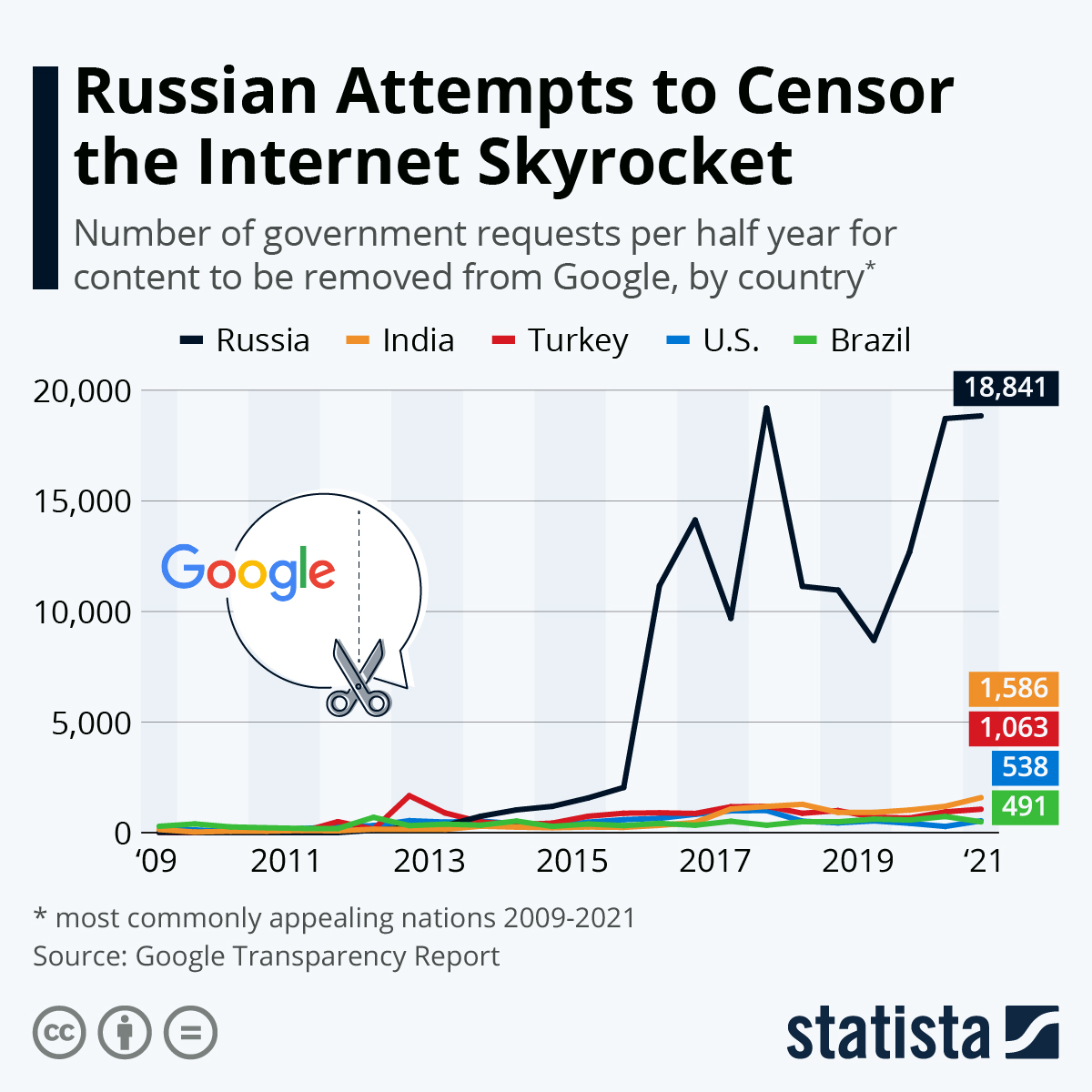
A loss of the truth has catastrophic consequences for the citizens of Russia and Ethiopia. Restrictions on media use, right to opinion, and the ability to perform one's job with integrity. At the heart of these restrictions is a profession jeopardized, journalism. In media outlets controlled by the government, people are treated like machines, meticulously controlled to dispute the information given by the authorities. This has led to widespread destruction, including futile searches for the truth, manipulated beliefs, and a lack of diverse perspectives.
This marks the second year since Russia's full-force invasion of Ukraine. Since then, the Russian government has enacted a legislation to exert superiority over the information shared with the public regarding the conflict. Russian authorities have been abusing criminal and administrative charges to suppress peaceful anti-war speech. By labeling it as “false information” and “discreditation”. This issue has increased arrests and motivated killings, creating a concerning trend. As of October 2023, seventy-seven Russian citizens were convicted and sentenced on the charge of spreading “false information” and fifty-two were charged on account of “discreditation." Relying on this data alone, we can gather the situation's sensitivity. ( Hassan, Tirana. “World Report 2024: Rights Trends in Russia.” Human Rights Watch, 11 Jan. 2024, www.hrw.org/world-report/2024/country-chapters/russia.)
This new law has catapulted the way that Russian citizens currently live. Journalists face challenges in identifying loopholes to express their opinions due to the frequent legislation changes. Speaking of changes, in April, the legislation was modified to allow naturalized Russian citizens to be deprived of their citizenship and deported on the charge of spreading “false information” or “discreditation”. For example, in April three hundred and ninety-eight Russian citizens had their passports confiscated on account of committing a crime, like “discredation”. North Realties, RFE. “Some 400 Naturalized Russians Stripped of Citizenship under New Law.” Some 400 Naturalized Russians Stripped Of Citizenship Under New Law, RFERL.org, 30 Apr. 2024, www.rferl.org/a/russian-passports-citizenship-cancellation-naturalized-citizens/32927482.html.
Russia has claimed its title of having no tolerance for any “disrespect” portrayed in the media. There are laws criminalizing speech that could “offend the religious feelings of believers”. Essentially blasphemy. The law prohibits any disrespect displayed online towards the military as well. Content creators who retaliate against the government will receive consequences, such as imprisonment or an attack of some nature.
A reporter in Russia for many years, Nicholas Simmons (NAME CHANGED FOR CLIENT PRIVACY) endured multiple challenges while working as a journalist. He was often questioned, forced to fire people whose political views didn’t align with the companies, and harassed when trying to work righteously. Under this profession, Nicholas was treated horribly, not only at the hands of his company but also by the Russian government.
Approximately 4,842 miles a country is under the same unjust dictatorship. Ethiopia was in a 21-month-long civil war, pitting the federal government against rebel forces such as the Tigray Peoples Liberation Front (TPLF). The conflict has caused a decline in the number of journalists.
TPLF used to have control over the Ethiopian government. Since they have been out of office, Ethiopian authorities have sought to paint TPLF as a terrorist group. This exemplifies how individuals in positions of power manipulate innocent civilians for their gain.
Journalists are highly susceptible to abuse if they fail to broadcast the message previously prescribed to them by their employers. This continues a cycle of misinformation, reminiscent of the blind leading the blind. When journalist David Fulton (NAME CHANGED FOR CLIENT PRIVACY) began reporting in Ethiopia, much of his covering was negative propaganda towards the TPLF. His superiors instructed him to distort the truth about the war and cause harm to the members of TPLF. His company forced reporters to refer to the TPLF as a terrorist group. David attempted to publish material against his superior's orders, but when publishing the “disrespectful” articles he was often reprimanded with physical abuse.
Furthermore, The Ethiopian government has imposed several restrictions on social media, banning apps commonly used, such as TikTok, Facebook, and Telegram because of the outbreak of protests that happened in the Oromia region. Specifically in Tigray, there was a prolonged internet shutdown, Internet access has only recently resumed. The denial of internet access represents a violation of a fundamental right. Deprived of access to external sources, Ethiopians face significant danger when trying to navigate through a war. Ethiopia ranks as one of the most censored countries, And if this cycle continues then Ethiopia is well on its way to abolishing journalism as a whole.
In a world where you have dictators like Vladimir Putin and Abiy Ahmed, expressing opinion becomes a matter of life and death. Conversely, in the United States, we are accustomed to freedom of speech. We often take it for granted. Unable to fathom the oppressive regimes where opposing views are silenced. The power of knowledge is our greatest asset as Americans. Without access to differing opinions or external sources, we are trapped in a web of conformity, stripped of our individuality and autonomy. In contrast to the liberties we possess, we should be cognizant of places like Ethiopia and Russia that face the harsh reality of ideological conformity and the fading of diversity within viewpoints. I want this article to remind us to value our freedom and advocate for those who are still fighting for theirs.
Citations
Mumo, Muthoki. “Journalists Face Growing Hostility as Ethiopia’s Civil War Persists.” Committee to Protect Journalists, 1 Aug. 2022, cpj.org/2022/08/journalists-face-growing-hostility-as-ethiopias-civil-war-persists/.
Hassan, Tirana. “World Report 2024: Rights Trends in Russia.” Human Rights Watch, 11 Jan. 2024, www.hrw.org/world-report/2024/country-chapters/russia.
Hassan, Tirana. “World Report 2024: Rights Trends in Ethiopia.” Human Rights Watch, 11 Jan. 2024, www.hrw.org/world-report/2024/country-chapters/ethiopia.
“Russia - United States Department of State.” Russia, Government, www.state.gov/reports/2023-country-reports-on-human-rights-practices/russia/. Accessed 6 June 2024.
“Ethiopia - United States Department of State.” Ethiopia, Government, www.state.gov/reports/2023-country-reports-on-human-rights-practices/ethiopia/. Accessed 6 June 2024.
-1.png)


