

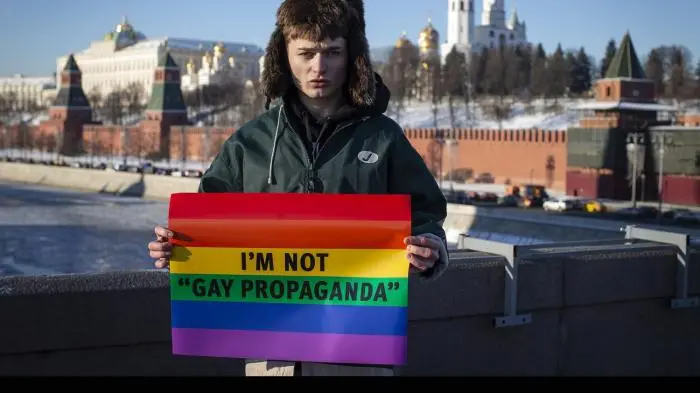
Regarding progression, most people associate words like equality and justice. However, when dissecting the recent implementation of the anti-LGBTQ laws in Russia, Uganda, and Ghana. It becomes evident that these notions of equality and justice are blatantly absent from the legislative landscape, Instead, replaced by oppression and discrimination.
From Russia's notorious homosexual propaganda law to Uganda's homophobic penalties for engaging in same-sex acts, to the unfortunate criminalization of same-sex marriage in Ghana. These legislative acts have caused a consistent cycle of fear for the LGBTQ community living in those regions.
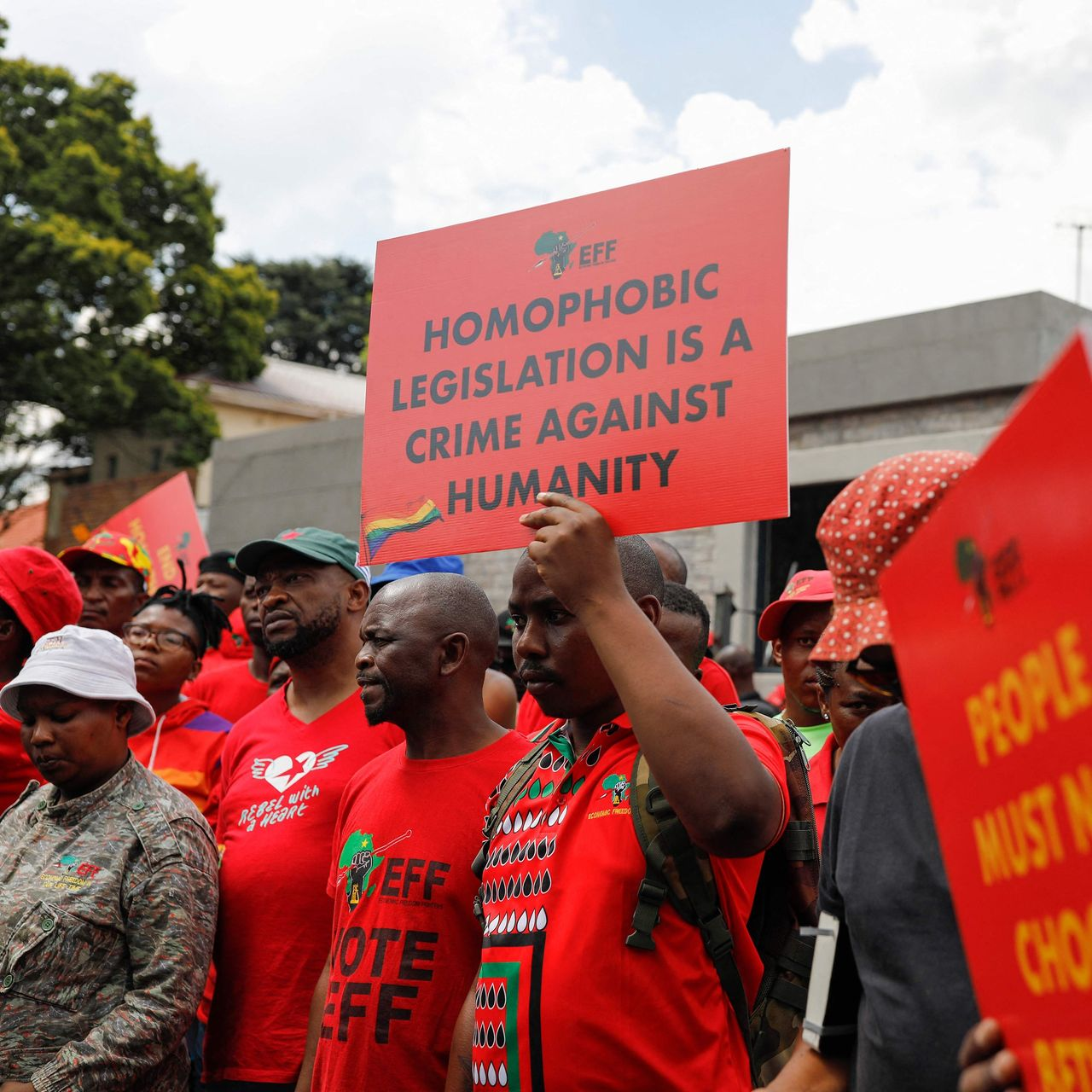
President Yoweri Museveni recently signed a bill called The Anti-Homosexuality Act which is currently being upheld by the Constitutional Court. This bill was signed in May of 2023. The Act prohibits same-sex marriage, any engagement in same-sex acts, or promotion of homosexuality.
These offenses can range from twenty years imprisonment to receiving the death penalty. Previously, the Anti-Homosexuality Act of 2023 was similar to a version before called “Kill the Gays”. That bill was passed in 2014 and ultimately blocked in the court on a technicality.
Moreover, In Uganda, publishing or advocating for an LGBTQ group is a widely known criminal offense. An act of solidarity like this can put you at risk of a twenty-year prison sentence. Unfortunately, the law extends its impact beyond the individual. For example, if there is the slightest suspicion of a person being homosexual you are obligated to report it to the Ugandan police. The Anti-Homosexuality Act is life-threatening, a violation of privacy, and inhumane.
Michael Smith (NAME CHANGED FOR CLIENT PRIVACY) lived in Uganda for the majority of his life. He attended a school where he hung out with mostly males. The boys he was friends with started to experiment with things like marijuana and same-sex intercourse. Michael knew that being a part of the LGBTQ was frowned upon in his community. This caused Michael to begin to seek a safe environment.
Michael soon realized his passion for deejaying, he eventually joined a DJ Academy, this allowed him to have the space to be comfortable in his sexuality. Taking himself out of the judgmental community and planting him with other people who sought out the same thing as him, to feel accepted for who they are. This is why he began performing at many nightclubs around Uganda.
Later, Michael ended up joining a sports team. He later learned through brief conversations that some of his teammates were part of the LGBTQ community. Consequently, if someone found out you were homosexual you were kicked off the team.
Some of Michaels's teammates frequented the nightclubs he deejayed. Michael was subjected to the unfortunate side of being part of the LGBTQ community rather quickly, the club he was deejaying at was raided. People were brutally beaten and arrested. This started to become a recurring theme amongst these nightclubs. One of the times the club was raided Michael lost all of his deejaying equipment.
Shortly after, Michael started a relationship with a man named Jack (NAME CHANGED DUE TO CLIENT PRIVACY). The authorities figured out Jack was gay and he had no choice but to flee to another country. Moreover, the local council and police found out about the relationship between Michael and Jack. This caused serious issues for Michael because the authorities were after him, as well as his father, who was not accepting of Michael.
Later Michael was summoned for a clan meeting to which he did not show up, knowing he would be at risk of physical harm. Eventually, Michael fled to the United States seeking an accepting community.
Uganda is not the only country that has these discriminatory laws. Russia has been stealing away its citizens' fundamental rights for a decade now, claiming that if any homosexual propaganda is advertised there will be charges against you. Camouflaging this homophobic law when Russian lawmakers emphasize it’s for the minor's benefit. Using this law as a way to shut down any pro-LGBT event, terminate LGBT activists, and delete any “gay-promoting” media. This law was enforced in 2013. Although the only law put in place currently is the Gay Propaganda Law this doesn’t diminish the ostracization felt by members of the LGBTQ residing in Russia.
Speaking of, Oscar Langford (NAME CHANGED FOR CLIENT PRIVACY) Oscar grew up in an Orphanage located in Russia, targeted and demeaned from an early age. The physical and verbal mistreatment was traumatizing for Oscar. Oscar claims “ Since I was very young, I have had a sense that I was different, but I was not allowed to talk about sexuality growing up and did not come to understand what those feelings were until much later”. Growing up Oscar was bullied by both students and teachers. The principal discriminated against Oscar, he believed the most effective way to punish children was physical abuse. Oscar was called derogatory names, along with a lot of other unfair punishments.
Oscar was later evaluated in his teen years by a psychologist and recommended to a clinic to “treat” his homosexuality. After finishing his first year at a university he was continuously subjected to harassment online and in person.
Oscar began seeing a guy named Eric (NAME CHANGED FOR CLIENT PRIVACY) over a few weeks Oscar and Eric hung out on several different occasions. Eventually, Eric stopped answering his phone, Oscar was concerned and texted a friend who lived in the same building. Oscar's friend told him Eric had been stabbed to death and that he had heard Eric screaming all night pleading for help. Oscar's friend claimed he had called the police and the dispatchers told him police were on the scene, but, when entering Eric's apartment it was clear this was an attack. The police said he was a border patrol officer “and that fucking gay shouldn’t have disgraced his uniform”. Oscar was devastated. Oscar decided to immigrate to the United States in hopes of a safer lifestyle.
Regrettably, there has been an increase in hate crimes against the LGBTQ community. There was a study conducted from 2010 to 2020 to see the rise of discrimination towards LGBTQ individuals after the propaganda law was passed, and the study found that “ The overall number of victims increased by three times after the introduction of the “gay propaganda law” in 2013. (“Responding to Hate Crimes through Restorative Justice ...” The Decade of Violence: A Comprehensive Analysis of Hate Crimes Against LGBTQ in Russia in the Era of the “Gay Propaganda Law” (2010–2020), Taylor & Francis Online, www.tandfonline.com/doi/full/10.1080/10282580600564784. Accessed 24 May 2024.)
Luckily, there is a pocket of progression in Russia. Transgender citizens are allowed to change their gender and identity on legal documents. The Gay Propaganda law in Russia seems to only legally affect the advertisement side. However, it’s important to acknowledge the LGBTQ people who are still fighting to express their true identity. As we open the discussion of struggles the LGBTQ Russians face, it is important to recognize things like, the Russian authorities denying individuals the permits to hold pride parades, and the escalation of sexuality-based violence within protests and advocacy events.
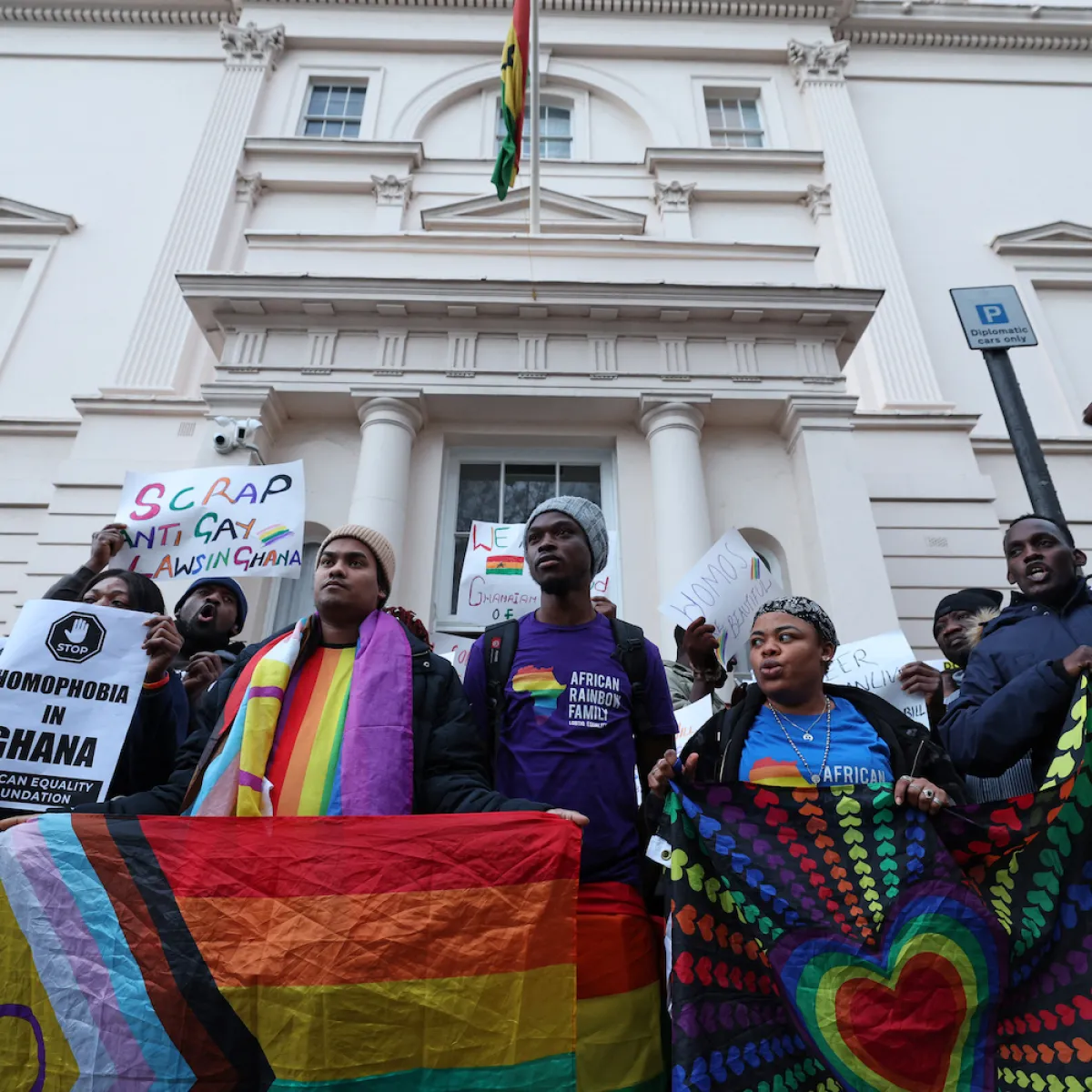
Ghana follows in Russia’s and Uganda's unrighteous footsteps. In Ghana, a bill that was passed on February 28th, 2024 claims an LGBTQ individual could receive a sentence of three years for partaking in same-sex acts and five years for advocating for the LGBTQ community. This bill was introduced in the parliament in 2021, and the people of Ghana have been continuously fighting against this restriction on basic human rights since. Activists fear for their lives, Considering anyone who associates themselves with the LGBTQ community is subjected to prosecution.
This bill overall has instilled fear in the citizens of Ghana. While they wait for their president Nana-Akufo-Addo to either pass or veto it. The bill goes against Ghana's constitution, which clearly states that all Ghanaian citizens are entitled to freedom of speech. These rights are being actively denied to LGBTQ citizens.
For example, A man named Roger Wolff (NAME HIDDEN FOR CLIENT PRIVACY). Roger was in a committed relationship with a man named Shawn (NAME HIDDEN FOR CLIENT PRIVACY) in Ghana homosexuality “is against the law but it is also forbidden by all religious groups to be gay”. Says Roger. Roger and Shawn's relationship had to be kept a secret to avoid harm ordered by the government.
Unfortunately, their relationship didn’t remain a secret for very long because Roger had forgotten to close his window while engaging in intercourse with Shawn. A passerby shouted at the two young men, and shortly after many people came by with sticks and knives threatening to kill them. Approximately twenty men broke down the door to Roger’s room and began physically assaulting him, kicking his legs and punching him in the shoulders. Roger was able to escape but Shawn was taken and later killed. The person who saw it had reported it to the police, so the police began their search for Roger. As well as Shawn’s tribe who wanted to kill Roger as retribution for the death of Shawn. Roger, in fear, fled Ghana and immigrated to the United States.
The law is currently still up for debate whether members of the LGBTQ should be imprisoned, given community service, or ordered conversion counseling. Presently, people in the LGBTQ community still struggle to seek safety within their home countries. In situations like this where physical and emotional abuse is present people, part of the LGBTQ are powerless. By sharing these stories I hope we can shine a light on the disparities that individuals go through when trying to express themselves openly and honestly.
Citations
Salako, Pelumi, and Sadiya Ansari. “Anti-LGBTQ+ Laws in Ghana and Uganda Feel the Heat from Sanctions.” Context, Context, 18 Apr. 2024, www.context.news/money-power-people/anti-lgbtq-laws-in-ghana-and-uganda-feel-the-heat-from-sanctions.
Carter, Sarah. “Ghana’s Parliament Passes Strict New Anti-LGBTQ Legislation to Extend Sentences and Expand Scope.” CBS News, CBS Interactive, 28 Feb. 2024, www.cbsnews.com/news/ghana-anti-lgbtq-legislation-passed-by-parliament/.
Obulusta, George R. “Ugandan Court Upholds Anti-LGBTQ Law but Says Some Rights Infringed | Reuters.” Reuters, Reuters, 23 Apr. 2024, www.reuters.com/world/africa/ugandas-constitutional-court-upholds-anti-homosexuality-law-2024-04-03/.
Madowo, Larry, and Bethlehem Feleke. “‘Nowhere Is Safe’ in Uganda as Harsh Anti-Gay Bill Leads to Reported Evictions, Shaming and Mob Justice.” CNN, Cable News Network, 29 June 2023, www.cnn.com/2023/06/29/africa/uganda-life-for-lgbt-community-intl-cmd/index.html.
-1.png)


